✍️ Authored by the ACSPR Team | Climate, People & Planet
📌 Shaping Africa’s Future with Evidence, Equity, and Innovation for Impact
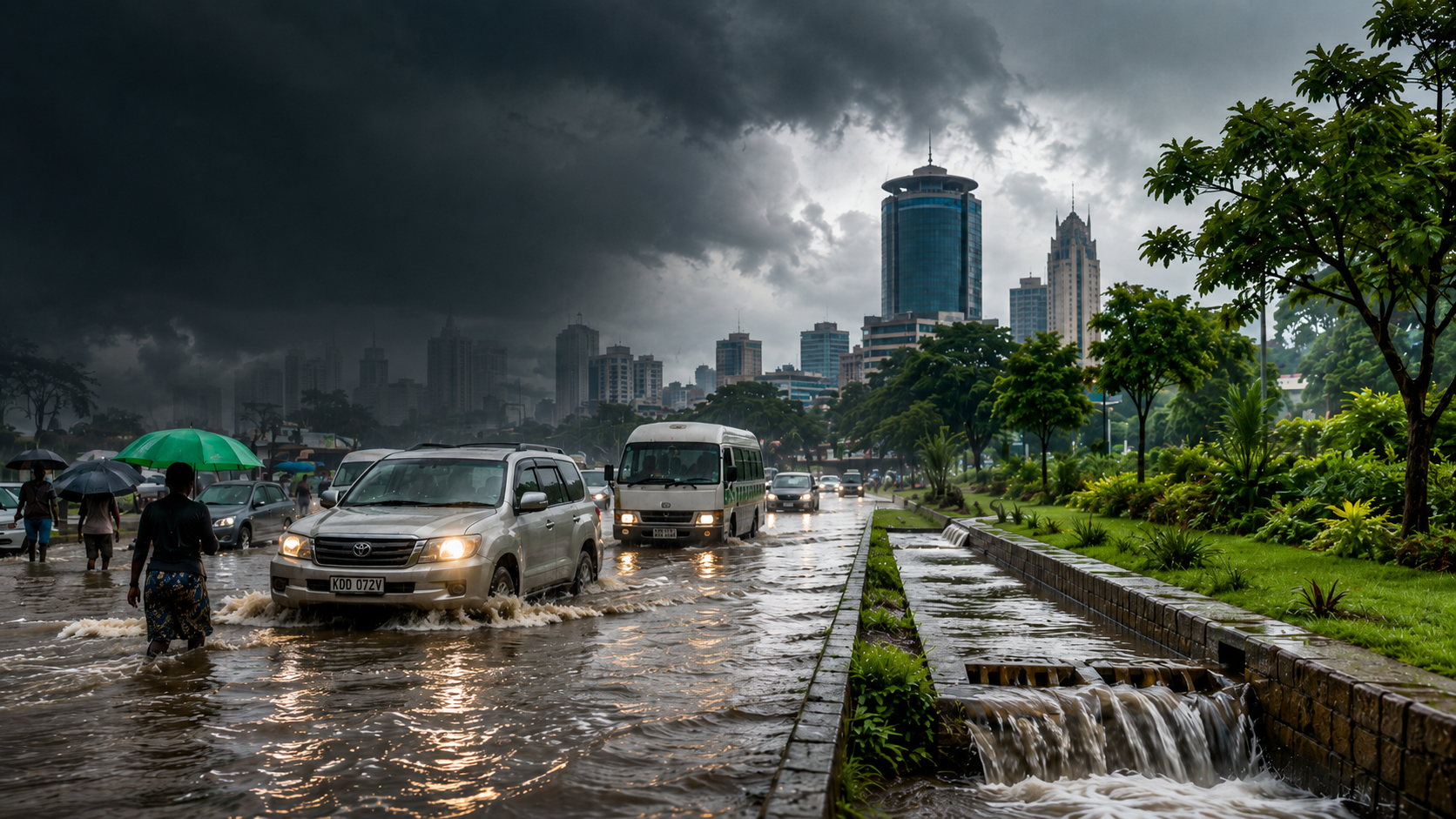
East African cities are being pushed toward a hard choice: keep growing in ways that trap water, deepen inequality, and amplify climate shocks, or plan now for urban resilience.
📌 Shaping Africa’s Future with Evidence, Equity, and Innovation for Impact
East African cities are being pushed toward a hard choice: keep growing in ways that trap water, deepen inequality, and amplify climate shocks, or plan now for urban resilience.
The pressure is rising fast. The African Union reports that Africa’s urban population is expected to reach 50% by 2030 and 60% by 2050, with cities absorbing an additional 600 million people by mid-century. That scale of growth can drive prosperity, but without better planning, it also creates ideal conditions for urban flooding.
The warning signs are already here. During the March–May 2024 rains, the World Meteorological Organization reported severe flooding across East Africa, with major impacts in Kenya, Tanzania, and Burundi. UNICEF reported in May 2024 that almost one million people in Burundi, Kenya, Somalia, and Tanzania had been affected by flooding and landslides. In Kenya alone, 293,661 people were affected and 54,837 households were displaced; in Tanzania, 210,000 people were affected and 161 people had died; in Somalia, more than 160,000 people were affected, about two-thirds of them children.
But this is not only a climate story. It is also an urban governance story.
Floods become urban disasters when intense rainfall meets blocked drains, paved-over wetlands, weak land-use control, unplanned settlements, poor waste management, and overstretched infrastructure. The IPCC Sixth Assessment Report finds with high confidence that heavy precipitation events are projected to become more frequent and intense across Africa with additional warming, while East Africa is expected to experience heavier rainfall extremes at higher warming levels.
That means today’s drainage failures are not temporary inconveniences. They are warnings of a future that is already arriving. Choosing to drain alone is choosing to drown later, because drains without planning, maintenance, financing, waste management, and green infrastructure will eventually fail.
Why Urban Flooding Is Getting Worse
Rapid urbanization is a major driver. As roads, roofs, parking areas, and compacted surfaces spread, rainwater has fewer places to soak into the ground. Instead, runoff moves faster and in larger volumes, overwhelming drains and low-lying neighborhoods. The African Union has already warned that rapid urban growth is straining infrastructure and services across African cities.
Inequality makes the risk sharper. The households hit first and hardest are often those in informal settlements, floodplains, and poorly serviced neighborhoods. UNICEF’s regional update on the 2024 floods showed that damage extended well beyond homes to schools, roads, crops, water systems, and basic services, underlining how flood exposure in East Africa is concentrated where poverty and weak infrastructure intersect.
Kampala shows what this looks like in practice. The Uganda Bureau of Statistics found in its 2025 rapid assessment of flooding in Greater Kampala that 91% of respondents had experienced or observed flooding while travelling, 84% said the affected places flood regularly whenever it rains, and more than 100 flood spots were identified. Average travel time to usual destinations rose from 40 minutes on a normal day to 134 minutes during floods.
That is not just inconvenience. It is lost productivity, delayed emergency response, higher transport costs, disrupted school attendance, weakened business activity, and a more fragile urban economy. A city that cannot move during rainfall cannot claim to be resilient.
Why Drainage Alone Is Not Enough
Drainage still matters, but drainage alone is not enough.
Kampala’s climate vulnerability assessment warns that the city is already facing increasing floods, infrastructure strain, and water-related public health risks. UBOS also found that poor drainage was the most commonly reported cause of flooding, followed by wetland degradation. When drains are undersized, badly maintained, or clogged with waste, they stop functioning as protective infrastructure and become part of the hazard itself.
That is why cities must pair drainage upgrades with basic solid waste management. A drain filled with plastic is not a drain at all. Evidence from recent East African flood emergencies consistently links clogged channels, damaged waste systems, and overwhelmed infrastructure to worse urban impacts.
Research from the region points to the same conclusion. Studies from Ethiopia show that urbanization and climate change can significantly increase runoff and reduce the effectiveness of existing stormwater systems. Research from Adama indicates that neighborhoods with better-connected, grid-like street patterns drain more efficiently than areas dominated by irregular layouts and cul-de-sacs.
Technology may also have a role. A recent study from Mogadishu presents an IoT-based smart drainage model using real-time monitoring and automated responses to reduce overflow risk. But such systems should not be treated as a shortcut. They require reliable power, internet connectivity, technical skills, maintenance budgets, and institutional capacity. For many East African cities, smart drainage will only work if the basics are already in place: functioning drains, updated flood maps, proper waste collection, and accountable maintenance systems.
In other words, the question is not whether cities should drain. They must. The question is whether they will drain intelligently, fairly, and sustainably, or continue investing in infrastructure that fails every rainy season.
Nature-Based Solutions Are Not Optional
One of the clearest lessons from recent urban flood research is that concrete alone cannot solve everything. Wetlands, retention areas, rainwater harvesting, permeable surfaces, green corridors, and other blue-green systems are not decorative environmental projects. They are flood infrastructure.
Uganda already has evidence of this. Kampala-based modeling found that distributed rainwater harvesting could reduce total flood volume by 16% to 45% and flood duration by 18% to 24%, especially in moderate storm conditions. That is a significant resilience gain from interventions that can be cheaper, more distributed, and easier to scale than major engineered works alone.
Wetlands matter for the same reason. When protected, restored, and integrated into city design, they slow runoff, store water, filter pollutants, and reduce downstream flooding. When they are degraded or built over, cities lose some of their cheapest and most effective natural defenses. Kampala’s own assessment and climate documents both point to wetland loss as part of the flood problem.
This is where East African cities need a mindset shift. Wetlands should not be treated as idle land waiting for development. They are working infrastructure. Green corridors are not beautification projects. They are risk reduction systems. Rainwater harvesting is not a household add-on. At scale, it can reduce pressure on drainage networks.
The choice is not between grey infrastructure and green infrastructure. Resilient cities need both. But when cities destroy wetlands, ignore retention areas, and approve construction in floodplains, they are not developing. They are borrowing against future disaster.
Planning Is the Real Front Line
Urban flooding is often described as a drainage problem. More accurately, it is a planning problem with hydrological consequences.
A city that allows settlement in floodplains, permits wetland encroachment, tolerates unmanaged waste in drainage corridors, and fails to connect land-use planning to infrastructure investment is effectively planning for future flood losses.
That is why resilient cities need more than engineering. They need land governance, enforcement, maintenance, risk mapping, and public accountability. In Greater Kampala, UBOS found that 97% of identified flood spots posed medium to high risk to users whenever it rains. These are not isolated incidents. They are visible signs of where planning and maintenance have fallen behind urban growth.
For residents, the difference between failure and resilience is tangible. One blocked channel can turn a commute into a crisis. One lost wetland can shift floodwater into homes and markets. One missing warning can turn a heavy rain event into a disaster.
Flood resilience is not abstract. It is measured in whether people can reach work, children can get to school, clinics remain accessible, businesses stay open, and households avoid losing assets every rainy season.
Who Pays for Resilience?
Flood resilience costs money. But flooding also costs money, often repeatedly, invisibly, and unfairly.
Every rainy season, households pay through damaged property, lost income, school absenteeism, transport delays, disease risk, and emergency expenses. Businesses pay through disrupted operations. Governments pay through road repairs, emergency response, and political pressure after disasters. The real question is not whether East African cities can afford flood resilience. It is whether they can afford to keep paying for failure.
Financing must therefore become part of the urban flooding conversation. Cities need predictable local revenue for drainage maintenance, not only donor-funded construction projects. Property taxes, service fees, development charges, and land value capture tools can help finance local infrastructure where they are transparently managed and fairly applied.
National governments also have a role. Climate adaptation financing, including support from international climate funds and development partners, should prioritize urban flood resilience, especially in fast-growing and high-risk cities. But climate finance should not replace domestic accountability. A city that approves construction in wetlands and then requests adaptation funding is treating public finance as a substitute for poor governance.
Developers also need to pay their share. When private developments increase runoff, encroach on wetlands, or overload existing drainage systems, the public should not carry the full cost. Planning approvals should require stormwater management plans, retention measures, and contributions to local drainage infrastructure.
This is the political economy of flooding: those who benefit from risky land decisions are often not the same people who pay when floods come. Until that changes, urban flooding will remain not only a technical problem, but also a governance and accountability problem.
What This Means
For city planners: stop approving subdivisions, housing projects, and commercial developments in floodplains and wetlands. Flood-risk mapping must guide land-use decisions before permits are issued, not after disasters occur.
For national governments: publicly map and name every major blocked drain, encroached wetland, and high-risk flood zone. Accountability starts with visibility. If citizens can see where risks are being created, they can demand action before disaster strikes.
For city authorities: finance maintenance, not just construction. Drainage systems must be cleared before the rainy season, waste collection must be strengthened, and flood hotspots must be monitored continuously.
For development partners: support early warning systems, urban flood forecasting, community-based resilience, and nature-based solutions that cities can actually maintain. The best resilience investments are not only technically impressive; they are affordable, locally owned, and institutionally realistic.
For citizens and communities: demand accountability for drainage maintenance and wetland protection. Report blocked drains, organize neighbourhood monitoring groups, reject illegal dumping, and hold political leaders accountable when they permit wetland encroachment or ignore known flood risks.
For researchers and civil society: translate flood data into public-facing tools. A map of blocked drains, flood-prone roads, encroached wetlands, and delayed public works can be more powerful than a long technical report sitting on a shelf.
Conclusion
Urban flooding in East Africa is not simply the result of heavier rains. It is the product of climate pressure colliding with rapid urban growth, weak planning, degraded ecosystems, poor waste management, underfunded maintenance, and unequal exposure.
East African cities cannot drain their way out of this challenge through concrete alone. They will need smarter drainage, stronger land governance, restored wetlands, basic waste systems, better early warning, credible financing, and planning that takes flood risk seriously before disaster strikes.
The choice is becoming clearer with every rainy season. Cities can keep expanding in ways that turn storms into disasters, or they can build urban systems that live with water more intelligently, more fairly, and more safely.
The choice between drain and drown is not really a choice between drainage and disaster. It is a choice between two failures - draining without planning or planning without enforcement and one success: resilient cities that treat water, land, people, and infrastructure as one connected system.