✍️ Authored by the ACSPR Team | Humanitarian Response & Resilience
📌 Shaping Africa’s Future with Evidence, Equity, and Innovation for Impact
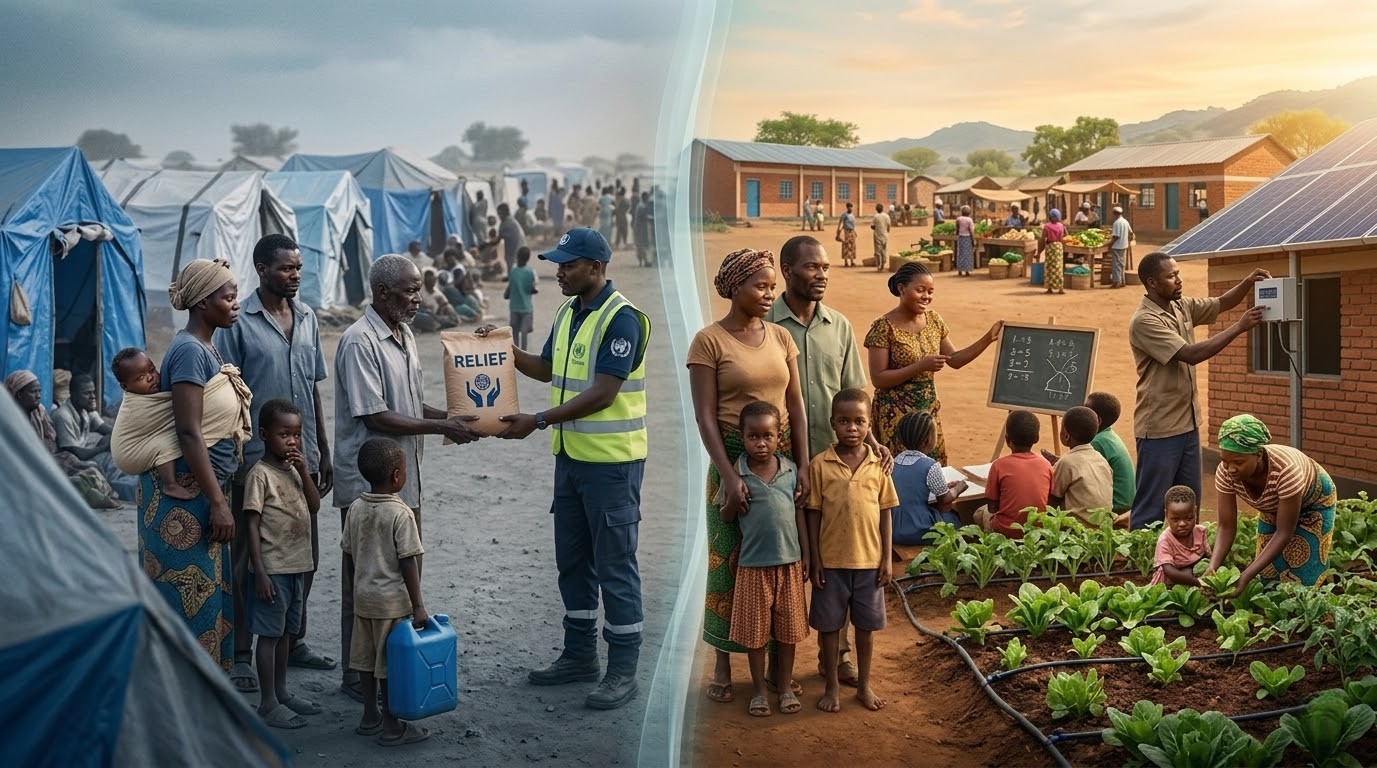
In the Nakivale and Oruchinga settlements of southwestern Uganda, thousands of refugees and host community members are learning regenerative agriculture and financial skills not as a temporary stopgap, but as a pathway to self-reliance. For many families, the goal is no longer simply surviving displacement, but rebuilding livelihoods and dignity.
📌 Shaping Africa’s Future with Evidence, Equity, and Innovation for Impact
In the Nakivale and Oruchinga settlements of southwestern Uganda, thousands of refugees and host community members are learning regenerative agriculture and financial skills not as a temporary stopgap, but as a pathway to self-reliance. For many families, the goal is no longer simply surviving displacement, but rebuilding livelihoods and dignity.
Across Africa, millions more displaced people are waiting not just for the next food ration, but for the opportunity to rebuild their lives.
Forced displacement has become one of the defining humanitarian and development challenges of our time. Globally, the number of forcibly displaced people surpassed 120 million by the end of 2024, with Africa hosting a significant share of these populations. Across the continent, displacement is increasingly protracted, with millions remaining in exile for years or even decades.
This reality is forcing governments, humanitarian agencies, and development partners to rethink their approach. Emergency aid remains essential in the immediate aftermath of displacement. But long-term displacement requires more than humanitarian relief it requires sustainable solutions that restore stability, livelihoods, and opportunity.
The Growing Scale of Displacement in Africa
Africa hosts some of the largest displaced populations in the world, including over 9 million refugees and more than 30 million internally displaced persons (IDPs). Conflicts in regions such as the Sahel, the Horn of Africa, and the Great Lakes continue to uproot communities, while political instability and weak governance structures exacerbate displacement pressures.
Climate change is also intensifying displacement across the continent. Extreme weather events floods, droughts, and cyclones are destroying homes, infrastructure, and agricultural livelihoods.
In South Sudan, for example, more than one million people were displaced by climate-related events in 2020 alone. Recurrent flooding and prolonged droughts disrupt farming systems and intensify tensions between pastoralist and agricultural communities, creating a vicious cycle of environmental stress, conflict, and migration.
This intersection of climate change, conflict, and economic fragility means displacement is no longer a temporary crisis. For many communities, it has become a long-term condition.
Understanding the Pathways Toward Durable Solutions
Addressing forced displacement requires identifying sustainable pathways that allow displaced populations to rebuild stable lives. Three main approaches are typically considered.
Return to Areas of Origin
Returning home is often considered the most desirable outcome. However, return is frequently constrained by ongoing insecurity, destroyed infrastructure, or unresolved land disputes.
In many conflict-affected areas, communities remain unsafe long after violence subsides, making return both risky and impractical.
Local Integration
Local integration allows displaced populations to settle permanently within host communities. In protracted displacement situations, this option often becomes the most realistic pathway.
However, successful integration requires policy support. Displaced populations must have access to employment, education, healthcare, and legal protections. Without these supports, integration can strain host communities and deepen social tensions.
Importantly, host communities often carry a significant burden. Nearly two-thirds of refugees worldwide are hosted in low- and middle-income countries, many of which already face economic constraints. Supporting host communities is therefore essential for sustainable integration.
Resettlement
Resettlement to another region or country remains the least common solution. Limited political commitment and resource constraints mean only a small fraction of displaced populations benefit from this pathway.
While resettlement offers safety for some individuals, it cannot address the needs of millions of displaced people across the continent.
Why Humanitarian Aid Alone Is Not Enough
Humanitarian responses traditionally focus on providing food, shelter, and emergency healthcare. These services are essential for saving lives in the immediate aftermath of displacement.
However, when displacement becomes prolonged, emergency assistance alone can inadvertently create dependency.
Across many African displacement contexts including Cameroon, Nigeria, South Sudan, Kenya, and Chad aid responses remain heavily focused on food assistance and basic services. Investments in livelihoods, vocational training, and economic inclusion remain comparatively limited.
Without opportunities to work, start businesses, or build financial independence, displaced populations struggle to rebuild their lives.
This reality underscores the need to move from aid dependency toward self-reliance and economic inclusion.
Examples of Long-Term Solutions in Practice
Promising initiatives across Africa are beginning to demonstrate what long-term solutions can look like.
The Sustainable Urban Integration of Displacement-Affected Communities (SUIDAC) programme, implemented in cities across the Democratic Republic of Congo, Ethiopia, Somalia, Uganda, and Sudan, provides one example. The programme strengthens municipal planning capacity while investing in infrastructure such as schools, water systems, and markets that benefit both displaced populations and host communities.
By supporting inclusive urban development, such initiatives help transform displacement settlements into integrated, resilient communities.
Similarly, development programs increasingly focus on livelihood support, climate-smart agriculture, vocational training, and small-business development to help displaced populations transition from aid recipients to active contributors to local economies.
The Role of Regional Frameworks and Governance
Africa has developed important legal frameworks aimed at protecting displaced populations and supporting durable solutions.
The African Union’s Kampala Convention, adopted in 2009, remains the world’s first legally binding treaty focused on protecting internally displaced persons. It commits governments to prevent displacement, protect displaced populations, and support durable solutions.
Regional frameworks such as Agenda 2063 and global initiatives like the Global Compact on Refugees also emphasize rights-based, development-oriented responses to displacement.
Yet implementation remains uneven. Many countries face challenges including limited funding, weak institutional coordination, and insufficient involvement of displaced communities in policy decisions.
Bridging this gap between policy commitments and implementation remains a central challenge.
Case Study: Uganda’s Self-Reliance Index
Case Study Box
Uganda’s Self-Reliance Index
Uganda has taken an important step toward evidence-based refugee programming through the Uganda Self-Reliance Index (UG-SRI), launched in 2025. The framework measures refugee and host community outcomes across key indicators such as food security, income, health, education, and economic capacity.
Developed by the Government of Uganda with support from international partners, the index provides a standardized way to track progress toward refugee self-reliance and guide future policy decisions.
By linking humanitarian programs to measurable development outcomes, the index helps move refugee responses beyond emergency assistance toward long-term resilience.
Centering the Voices of Displaced Communities
One of the most consistent lessons emerging from displacement research is that displaced people themselves must play a central role in shaping solutions.
Too often, policies are designed without meaningful consultation with those directly affected. Yet displaced communities possess critical knowledge about their needs, priorities, and risks.
Ensuring their participation in decision-making strengthens policy relevance, accountability, and long-term sustainability.
Durable solutions cannot be imposed they must be built with displaced communities, not simply delivered to them.
What This Means for Practitioners
Addressing protracted displacement requires coordinated action across governments, donors, development partners, and civil society.
For governments: Strengthen national displacement policies, implement the Kampala Convention, and integrate displaced populations into national development plans.
For donors: Bridge the humanitarian-development financing gap by supporting long-term investments in livelihoods, infrastructure, and social protection.
For implementing agencies: Adopt evidence-based tools to measure self-reliance and evaluate program effectiveness.
For advocates and researchers: Amplify the voices of displaced communities and ensure their experiences inform policy decisions.
From Emergency Response to Durable Solutions
Forced displacement in Africa is no longer simply a humanitarian challenge. It is a complex development issue shaped by conflict, climate change, governance, and economic inequality.
Addressing it effectively requires moving beyond short-term crisis management toward integrated strategies that combine humanitarian assistance, development investment, and peacebuilding efforts.
This means protecting the rights and safety of displaced populations, strengthening access to livelihoods and services, supporting host communities, and ensuring displaced people participate in shaping their futures.
Only through such comprehensive approaches can Africa move from managing displacement crises toward building durable solutions that restore dignity, stability, and opportunity.