✍️ Authored by the ACSPR Team| Population and Demographic Research
Shaping Africa’s Future with Evidence, Equity, and Innovation for Impact
Shaping Africa’s Future with Evidence, Equity, and Innovation for Impact
Uganda knows that 13.2% of its population aged two years and above has a disability. It knows that more than half of persons with disabilities aged 6–24 years are out of school. It knows that nearly three in five young people with disabilities aged 18–30 are not in employment, education, or training.
What Uganda does with that knowledge is now the real test of its commitment to inclusion.
For years, disability advocacy has pushed for visibility: count persons with disabilities, recognize their rights, and include them in national data systems. Uganda has made important progress. The country has ratified the United Nations Convention on the Rights of Persons with Disabilities, enacted disability-related legislation, and increasingly included disability questions in censuses and surveys.
But visibility alone is not inclusion.
A young person with a disability may be counted in the census but still find the classroom inaccessible, the job application platform unusable, the health facility unaffordable, and the digital service out of reach. That is the gap Uganda must now close: moving from disability data to equal opportunity.
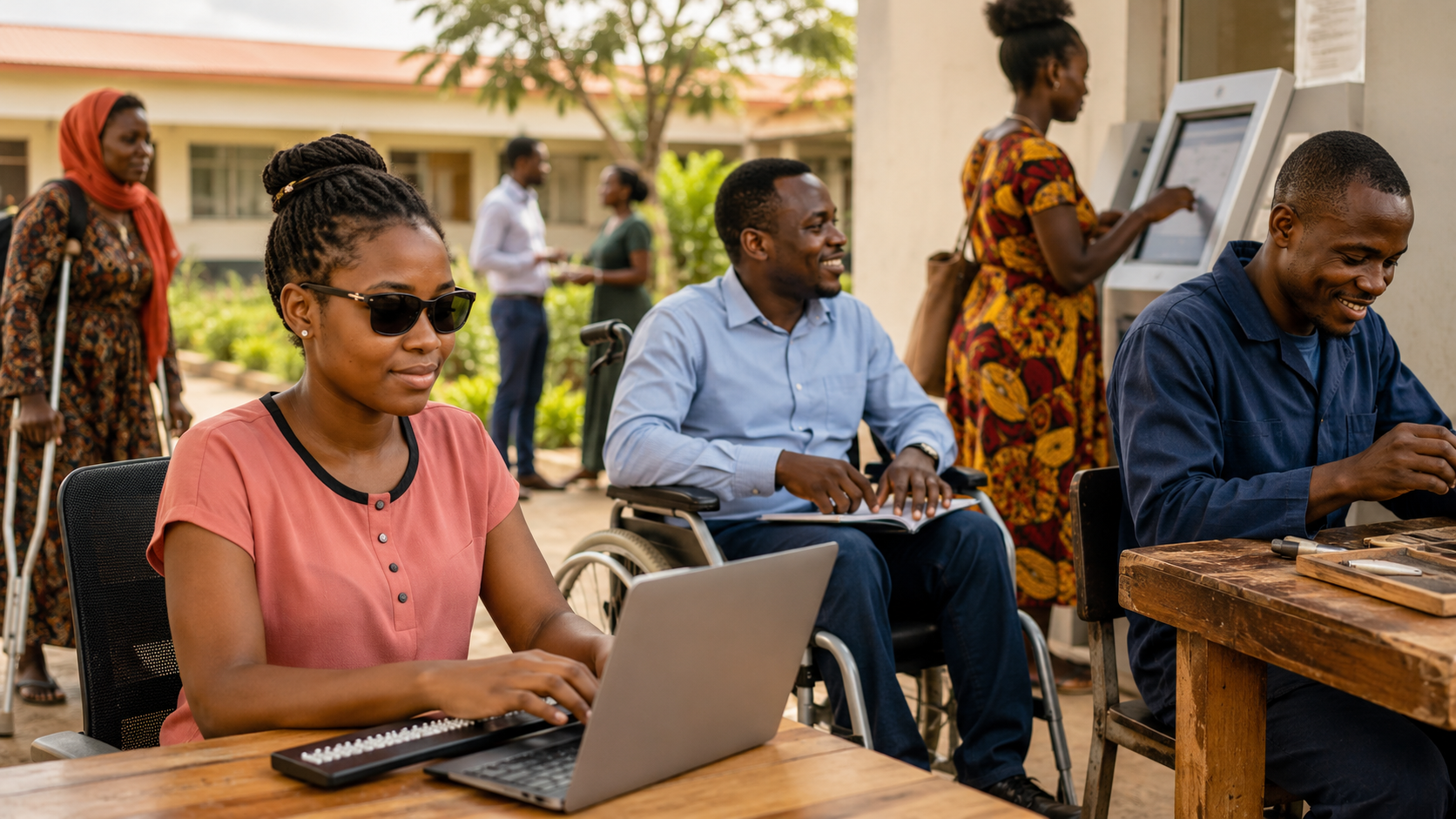
Consider Grace, a 22-year-old with a visual impairment. She completes secondary school with strong grades and dreams of joining university. But when applications move online, the portal is not compatible with her screen reader. She is not excluded because she lacks ambition or ability. She is excluded because the system was not designed with her in mind.
Grace’s story is not exceptional. It reflects the difference between counting persons with disabilities and building institutions that include them.
Uganda Has the Data to Act
Disability-disaggregated data helps governments identify who is being excluded, where inequalities are greatest, and which services require targeted investment. It supports planning, budgeting, programme design, and accountability for reasonable accommodation.
Uganda compares favourably with many countries in the availability of disability-related statistics. A cross-country assessment by Abualghaib et al. found that Uganda had sufficient information to disaggregate 14 of the 16 development indicators examined.
The National Population and Housing Census 2024 strengthens this evidence base. It provides Uganda with one of its most comprehensive recent pictures of disability, covering six functional domains:
● seeing;
● hearing;
● walking or climbing steps;
● remembering or concentrating;
● self-care; and
● speech or communication.
The Census shows that disability prevalence rises sharply with age: from 8.8% among children aged 2–17 years, to 17.1% among adults, and 46.8% among people aged 60 years and above. Among older women, prevalence reaches 50.0%.
This matters because disability is not a single experience. A person with a visual impairment may face different barriers from someone with a mobility, communication, psychosocial, intellectual, or hearing-related disability. Effective policy must therefore respond to different support needs, not treat persons with disabilities as one uniform group.
Data Is a Starting Point, Not the Whole Story
Census data is essential, but it does not tell the full story.
Disability estimates can vary depending on the questions asked, the age groups included, and the threshold used to classify functional difficulty. The 2014 Census estimated disability prevalence at 12.4%, while the 2024 Census reports 13.2% among people aged two years and above. However, these figures should not automatically be read as a simple increase over time because measurement approaches can differ.
Specialized research also shows that some forms of disability may be under-identified in general data systems. Studies using more detailed child-functioning tools, for example, may identify functional difficulties that broad census questions do not fully capture.
That is why census data should be complemented by disability surveys, administrative data, and qualitative research that captures lived experiences.
The most important question is not only how many people have a disability. It is also:
What barriers prevent them from participating fully and equally in society?
Education: Access Has Expanded, but Exclusion Persists
Education is one of the clearest areas where disability data has not yet translated into equal opportunity.
According to the 2024 Census, 51.3% of persons with disabilities aged 6–24 years were out of school. The rate was higher among females, at 53.1%, compared with 49.4% among males.
Literacy also reflects a gender gap. Among persons with disabilities aged ten years and above, literacy stood at 60.8% overall, but only 54.9% among females, compared with 68.8% among males.
These inequalities cannot be explained by impairment alone. They reflect barriers within the education system: inaccessible buildings, lack of assistive technologies, limited teacher preparation, stigma, communication barriers, and weak individualized support.
Research on higher education in Uganda shows that expanded admission opportunities have not eliminated exclusion. Students with disabilities may still face barriers in teaching, assessment, accommodation, libraries, transport, and access to learning materials.
Admission alone is not inclusion.
A student who enters university but cannot access classrooms, course materials, assessments, accommodation, or support services has not been given an equal chance to succeed. Uganda’s education system needs funded disability-support systems, not reliance on goodwill or informal arrangements.
Youth with Disabilities Are Being Disconnected from Opportunity
Uganda’s youth employment challenge is even sharper for young people with disabilities.
The Census shows that 56.6% of youth with disabilities aged 18–30 years were not in employment, education, or training. The rate was 50.7% among young men with disabilities and 61.5% among young women with disabilities.
This means that nearly three in every five young people with disabilities are disconnected from the main pathways through which young adults build skills, livelihoods, independence, and confidence.
The consequences are not only economic. Exclusion from education and employment can reduce social networks, civic participation, access to information, self-esteem, and independence. It can also increase dependence on families that may already be struggling with poverty and additional disability-related costs.
Youth employment and livelihood programmes must therefore go beyond listing persons with disabilities as a vulnerable group. They need accessible application systems, targeted outreach, adapted training, reasonable accommodation, inclusive workplaces, and monitoring systems that show whether young people with different disabilities are actually benefiting.
Employment Rights Need Enforcement
Uganda has legal and policy provisions intended to protect persons with disabilities from employment discrimination. But rights on paper do not automatically translate into access to decent work.
Employment exclusion often begins before a person even applies for a job. It may start with inaccessible schooling, limited vocational training, lack of assistive devices, inaccessible transport, or employers’ assumptions about productivity.
Even qualified persons with disabilities may face:
- ● inaccessible recruitment platforms;
- ● interviews held in inaccessible venues;
- ● communication barriers;
- ● refusal to provide reasonable accommodation;
- ● discriminatory attitudes; and
- ● limited career progression.
Census disability data should be linked to labour-force statistics, employer reporting, public-sector recruitment monitoring, and social-protection systems. Without this connection, Uganda may know how many people have disabilities but still fail to know whether they are accessing decent and productive employment.
Healthcare Remains Financially and Physically Out of Reach
Healthcare inclusion remains a major concern.
According to the 2024 Census, only 1.3% of persons with disabilities had health-insurance coverage. This is especially worrying because persons with disabilities may require regular treatment, rehabilitation, medication, assistive products, specialist services, transport support, or personal assistance.
Healthcare access is not only about whether a facility exists. It is about whether a person can:
- ● reach the facility;
- ● enter and move around safely;
- ● communicate with providers;
- ● understand health information;
- ● afford services;
- ● receive respectful care; and
- ● obtain medicines, rehabilitation, and assistive products.
Research in Uganda shows that persons with disabilities continue to face inaccessible facilities, negative staff attitudes, communication barriers, limited outreach, and inadequate reasonable accommodation.
Universal health coverage cannot be achieved when persons with disabilities remain excluded from affordable, accessible, and respectful healthcare.
The Digital Transformation Is Leaving Many Behind
Digital technologies now shape access to education, employment, banking, healthcare, public information, and government services. But persons with disabilities remain substantially excluded from Uganda’s digital transformation.
Among persons with disabilities aged ten years and above, only 42.4% owned a mobile phone, and just 5.9% had used the internet. Internet use was even lower among females with disabilities, at 4.7%, compared with 7.4% among males.
Digital exclusion is not only about network coverage. It is also shaped by:
- ● cost of devices and data;
- ● inaccessible websites and applications;
- ● limited screen-reader compatibility;
- ● lack of captioning and sign-language interpretation;
- ● inaccessible digital identification systems;
- ● limited digital literacy;
- ● poorly designed interfaces; and
- ● inadequate access to assistive technologies.
As Uganda expands digital public services, accessibility must be built into design and procurement from the start. Retrofitting inaccessible platforms after deployment is often more costly and less effective.
Digital transformation should not create public services that are technically available but practically unusable for many persons with disabilities.
Disability, Poverty, and Household Welfare Are Closely Connected
The Census also shows that disability is closely linked with household vulnerability.
Among households with at least one person with a disability, 37.4% were food insecure, 40.3% were operating within the subsistence economy, and only 45.1% had access to a proper toilet facility.
This reflects a wider cycle: disability can reduce earning opportunities while increasing costs related to healthcare, transport, personal assistance, and assistive products. At the same time, poverty can increase exposure to poor nutrition, unsafe working conditions, limited healthcare, and preventable impairments.
Social-protection and poverty-reduction programmes must therefore recognize disability-related costs. Equal treatment does not always produce equal outcomes when some households face additional barriers and expenses.
Women, Older Persons, and Multiple Exclusion
Disability inclusion must also be gender-responsive and age-sensitive.
Women with disabilities experience worse outcomes across several indicators, including literacy, NEET status, mobile-phone ownership, internet use, and mobile-money participation. They may also face heightened risks of violence, caregiving burdens, reproductive-health barriers, economic dependence, and exclusion from decision-making.
Older persons must also be central to disability planning. Nearly one in every two Ugandans aged 60 years and above has a disability. Among older women, the prevalence reaches 50%.
This has major implications as Uganda’s population gradually ages. Planning for disability and planning for ageing should be connected. Uganda will need stronger systems for rehabilitation, assistive products, accessible housing, mobility support, vision and hearing services, social protection, community-based care, and support for family caregivers.
Participation Requires More Than Legal Recognition
Inclusion is also about whether persons with disabilities can participate in social, civic, and community life.
Legal recognition is important, but participation remains difficult when meetings are held in inaccessible spaces, information is not provided in accessible formats, or people cannot afford transport.
Research in rural Uganda shows that disability-focused community groups can provide important spaces for advocacy, mutual support, and collective problem-solving. But participation is still limited by transport costs, inaccessible venues, stigma, and low confidence.
Organizations of persons with disabilities should therefore be supported not only as beneficiaries, but as partners in policy design, implementation, monitoring, and evaluation.
The principle should be clear:
Policies concerning persons with disabilities should not be designed without their meaningful participation.
What Appears to Work
Ugandan research provides important lessons about what can improve inclusion.
Evidence from disability-inclusive livelihood and graduation programmes shows that combining economic support with rehabilitation, community sensitization, productive assets, and confidence-building can improve participation and reduce unmet needs. However, short-term interventions are not enough. Gains must be sustained through accessible markets, functioning referral systems, continued community engagement, and long-term support.
In education, the Obuntu bulamu studies show the value of culturally grounded approaches based on shared humanity, peer support, family involvement, and community participation. These approaches have helped strengthen belonging, attitudes, and participation among children with disabilities and their families.
The wider lesson is clear: inclusion cannot be achieved through infrastructure or cash support alone. Effective interventions combine material assistance with social empowerment, family involvement, community sensitization, and institutional change.
What Must Change
Uganda has enough disability data to act. The next step is to ensure that data influences budgets, institutions, and services.
Eight priorities stand out.
1. Use disability data in planning and budgeting
Disability data should inform national, sectoral, and local-government plans. Ministries, departments, agencies, and local governments should allocate budgets for reasonable accommodation and track measurable disability indicators.
2. Strengthen routine administrative data
Schools, universities, health facilities, employment programmes, and social-protection schemes should collect disability-disaggregated data using consistent and rights-based approaches.
3. Fund and enforce accessibility standards
Accessibility requirements should be translated into enforceable standards for buildings, transport, education, healthcare, communication technologies, and digital public services.
4. Expand inclusive education support
Uganda should invest in accessible infrastructure, assistive learning technologies, teacher preparation, sign-language interpretation, Braille services, and disability-support centres.
5. Link disability data to employment programmes
Skills-development and youth-employment programmes should track who participates, who completes training, and who secures sustainable work.
6. Improve healthcare access and financial protection
Health facilities should be physically and communicatively accessible, while rehabilitation, assistive products, outreach, and disability-aware service delivery should be expanded.
7. Close the digital accessibility gap
Accessibility should be mandatory in digital-government systems, websites, financial platforms, and educational technologies.
8. Co-design programmes with persons with disabilities
Persons with disabilities and their representative organizations should participate meaningfully in setting priorities, designing interventions, allocating resources, monitoring implementation, and evaluating outcomes.
Consultation after decisions have already been made is not meaningful participation.
What This Means
For government: Allocate budgets for reasonable accommodation, enforce accessibility standards, and ensure that disability data informs planning across education, health, employment, social protection, digital transformation, and local government.
For development partners: Invest in disability-inclusive programmes, strengthen data systems, support organizations of persons with disabilities, and ensure that funded projects include accessibility from design to implementation.
For civil society: Advocate for implementation, not only policy commitments. Civil society should monitor whether services, budgets, and public institutions are actually becoming accessible and inclusive.
For researchers: Generate evidence that goes beyond prevalence figures and captures barriers, lived experiences, intervention effectiveness, disability-related costs, and intersectional inequalities.
For persons with disabilities and their organizations: Continue engaging in policy processes, demanding accountability, and shaping programmes that affect their lives.
The Real Measure of Progress
Uganda has made persons with disabilities more visible in national data. That is important progress.
But the real measure of success is not only whether persons with disabilities are counted. It is whether the evidence leads to accessible schools, equitable healthcare, decent employment, inclusive technologies, stronger social protection, safer communities, and meaningful participation in national life.
Uganda’s commitments under the United Nations Convention on the Rights of Persons with Disabilities are clear. The next step is ensuring that those commitments are reflected in budgets, services, institutions, and daily life.
Counting people is only the beginning.
Inclusion begins when every number leads to action, every policy is backed by resources, and every intervention is shaped by the voices of persons with disabilities themselves.
Uganda has moved forward in counting persons with disabilities. It must now move decisively towards removing the barriers that prevent them from participating on an equal basis with others.