✍️ Authored by the ACSPR Team | Education & Skills Development
📌 Shaping Africa’s Future with Evidence, Equity, and Innovation for Impact
📌 Shaping Africa’s Future with Evidence, Equity, and Innovation for Impact
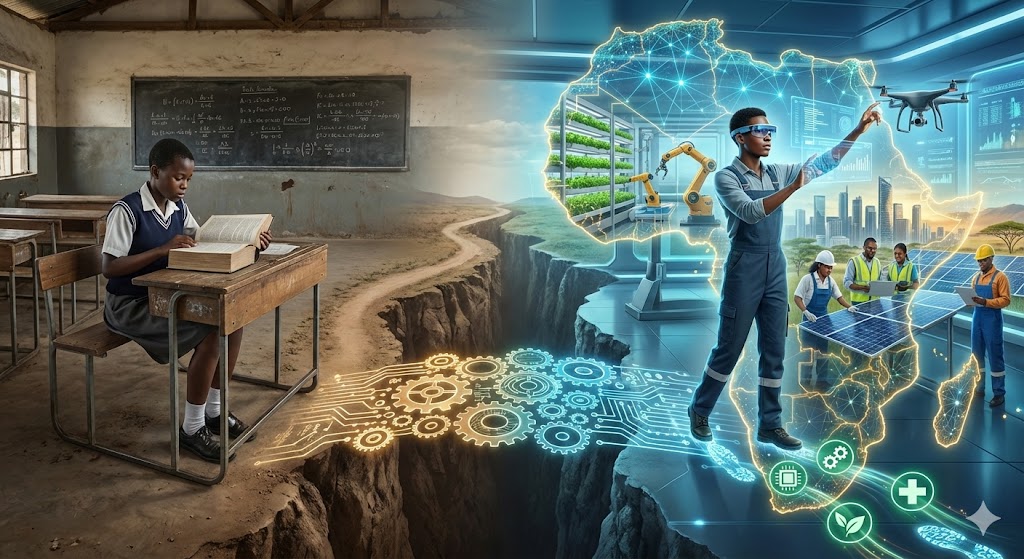
Africa stands at a critical crossroads. The continent has made significant progress in expanding access to education over the past two decades, with millions more children and young people enrolling in primary and secondary school. Yet a growing paradox persists: more schooling has not translated into more jobs.
Across Africa, young people are spending more years in classrooms but too many are leaving school without the skills demanded by today’s and tomorrow’s labour markets. This disconnect between education systems and future jobs threatens to undermine Africa’s demographic opportunity and slow inclusive economic growth.
Africa’s Education–Employment Paradox
Africa is the youngest continent in the world, with a median age of under 20 years. Every year, millions of young Africans enter the labour market, yet formal job creation has not kept pace with population growth.
While education systems have focused heavily on academic credentials, labour markets are increasingly demanding:
- ● Practical and technical skills
- ● Digital literacy and problem-solving abilities
- ● Adaptability for rapidly changing sectors
- ● Entrepreneurial and innovation-oriented competencies
The result is a widening skills mismatch - where graduates are available, but employers struggle to find job-ready talent.
Uganda’s Reality: Education Access Without Employability
Uganda illustrates this challenge clearly.
- ● Uganda has one of the youngest populations globally, with more than three-quarters of its population under the age of 30.
- ● The country has achieved near-universal access to primary education and expanded secondary and tertiary enrolment.
- ● Yet youth unemployment and underemployment remain persistent, particularly among school leavers and graduates without practical or market-relevant skills.
Many young Ugandans leave school with certificates but lack:
- ● Technical and vocational skills
- ● Digital and data competencies
- ● Work experience and exposure to industry needs
This gap fuels frustration, informal employment, and wasted human potential.
Why Education Systems Must Align with Future Jobs
1. The Future of Work Is Changing
Automation, digitalization, artificial intelligence, and green transitions are reshaping economies worldwide. Jobs of the future will increasingly require:
- ● Digital and data skills
- ● Creativity and critical thinking
- ● Lifelong learning and adaptability
Education systems that remain rigid, exam-driven, and theory-heavy risk preparing young people for jobs that no longer exist.
2. Skills, Not Just Certificates, Drive Employability
Evidence consistently shows that skills matter more than years of schooling alone. Employers value competencies such as:
- ● Communication and teamwork
- ● Problem-solving and innovation
- ● Technical and vocational proficiency
Aligning curricula with labour market needs helps young people transition more smoothly from school into productive work.
3. TVET and Skills Training Are Underutilized
Technical and Vocational Education and Training (TVET) systems across Africa remain underfunded, under-valued, and poorly linked to industry.
In Uganda, vocational pathways are often perceived as a “last resort” rather than a strategic route to employment - despite strong demand for skilled artisans, technicians, and digital professionals.
4. Education Must Respond to Local Economies
Africa’s economies are diverse. Skills development must be tailored to:
- ● Local labour markets
- ● Emerging sectors such as agribusiness, renewable energy, health, logistics, and the digital economy
- ● Informal and entrepreneurial realities where most young people work
One-size-fits-all education models no longer work.
From Education to Skills: What Needs to Change
To bridge the gap between school and work, African education systems must evolve in five key ways:
✔ Curriculum Reform
Embed practical, digital, and problem-solving skills alongside academic learning.
✔ Stronger School–Industry Linkages
Partner with the private sector to ensure training reflects real labour market needs.
✔ Youth-Centered Skills Pathways
Design flexible learning pathways that recognize different talents, learning styles, and aspirations.
✔ Investment in TVET and Digital Skills
Reposition vocational and digital skills training as engines of economic growth—not second options.
✔ Evidence-Based Planning
Use labour market data, population trends, and skills forecasting to guide education investments.
Why This Matters for Development
Aligning education systems with future jobs is not just an education issue - it is a development imperative.
When education systems fail to equip young people with relevant skills:
- ● Unemployment and underemployment rise
- ● Informality and economic vulnerability persist
- ● Inequality deepens
- ● The demographic dividend is lost
But when education and skills development are aligned, young people become:
- ● Productive workers and entrepreneurs
- ● Innovators and job creators
- ● Contributors to social stability and economic growth
A Call to Action for Donors and Partners
Africa’s youth population represents a powerful opportunity - but only if education systems evolve beyond access to relevance and impact.
Strategic investments are urgently needed in:
✔ Skills-oriented education reform
✔ TVET and digital learning systems
✔ Youth entrepreneurship and innovation ecosystems
✔ Labour market research and skills forecasting
✔ Inclusive education models that reach marginalized youth
✔ Skills-oriented education reform
✔ TVET and digital learning systems
✔ Youth entrepreneurship and innovation ecosystems
✔ Labour market research and skills forecasting
✔ Inclusive education models that reach marginalized youth
Evidence-based education and skills planning is essential to ensuring that Africa’s classrooms prepare young people for the realities of tomorrow’s jobs.
Conclusion: Education for the Jobs of Tomorrow
Africa does not suffer from a lack of young people or ambition. What is missing is alignment -between what schools teach and what economies need.
Moving from school to skills requires reimagining education as a bridge to opportunity, dignity, and productivity. With the right data, partnerships, and investments, Africa can equip its young people not just to graduate - but to thrive.
At ACSPR, we believe that skills-aligned education is one of the most powerful tools for inclusive and sustainable development.