The invisible “Floating Populations” shaping nations
✍️ Authored by Ojiambo Elivin Masiga | Population and Demographic Research
📌 Shaping Africa’s Future with Evidence, Equity, and Innovation for Impact
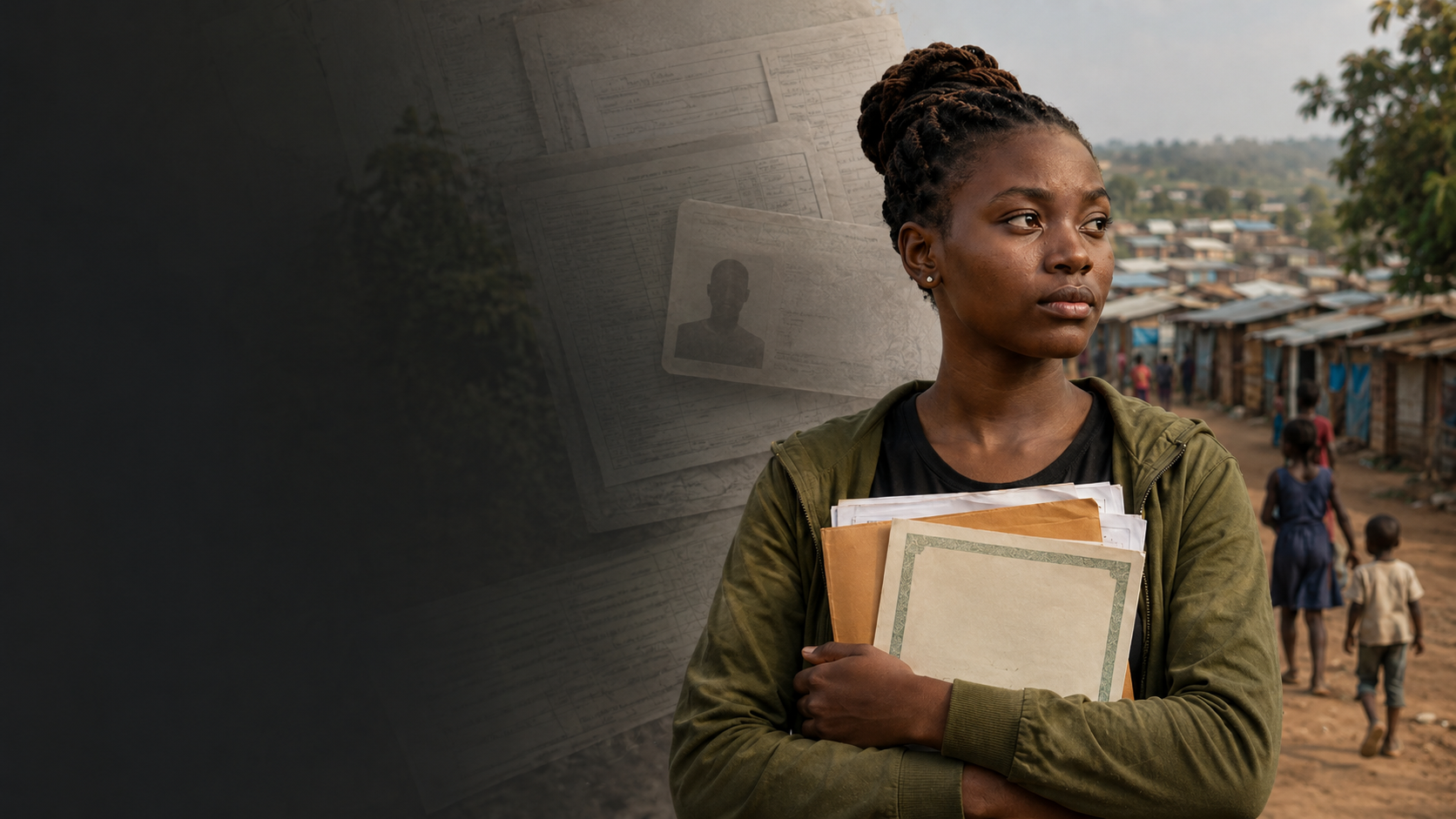
A child is born in a refugee settlement in western Uganda. She grows up speaking local languages, attends school when she can, and knows no other home. But when adulthood comes, she may discover that belonging in everyday life is not the same as belonging in law.
✍️ Authored by Ojiambo Elivin Masiga | Population and Demographic Research
📌 Shaping Africa’s Future with Evidence, Equity, and Innovation for Impact
A child is born in a refugee settlement in western Uganda. She grows up speaking local languages, attends school when she can, and knows no other home. But when adulthood comes, she may discover that belonging in everyday life is not the same as belonging in law.
She tries to open a bank account. No recognized national ID. She tries to enroll for further study. Her documents do not fit the system. She needs care, registration, or formal work, and each step becomes a reminder that she exists in life, but not fully in law.
She is part of a larger population that many states still struggle to see clearly: people who live within a country’s borders but remain only partially recognized by its legal and administrative systems. They may be refugees, undocumented migrants, children born in displacement, long-term residents without nationality, or people whose lives fall between census categories, citizenship rules, and registration systems. They are present in schools, markets, farms, settlements, and cities. But too often, they remain invisible where it matters most: in law, in planning, and in access to rights.
This is not a small issue. The World Health Organization says that more than one billion people, about one in eight globally, are on the move. That includes migrants, refugees, asylum-seekers, internally displaced people, students, and migrant workers. Mobility itself is not the problem. In many cases, movement creates opportunity, safety, and survival. The deeper problem is what happens when large numbers of people live for years, or even generations, without clear legal recognition or secure access to identity systems.
Beyond movement: when “temporary” becomes permanent
The phrase “floating population” has often been used to describe people living outside permanent registration systems, especially in contexts of large-scale internal migration. But in East Africa, the issue is wider and more urgent than mobility alone. It includes people living between categories: present in a country, but not fully counted; known socially, but not always recognized administratively; settled in practice, but uncertain in status.
That uncertainty has real consequences. A person without recognized identity documents can struggle to access education, formal employment, banking, health services, property rights, and legal protection. A child whose birth is not properly registered can begin life with a weakened claim to legal identity. A family that has lived in one place for years may still find itself treated as temporary, exceptional, or outside the systems that shape ordinary citizenship.
Birth registration is especially important here. UNHCR describes it as a key step toward legal identity and a safeguard against statelessness because it creates an official record of where a child was born and who the parents are. Without that foundation, the risk of exclusion grows over time.
Why Uganda matters
Uganda is a powerful place to ask these questions because it stands at the center of displacement politics in the region. UNHCR says Uganda hosts about 1.95 million refugees and asylum-seekers, making it one of the largest refugee-hosting countries in the world and the largest in Africa in recent reporting periods. Its refugee policy has often been praised for its openness, including freedom of movement, access to land in settlements, and the inclusion of refugees in national systems.
But that humanitarian success sits alongside a harder question: what happens when displacement lasts for years, children are born in exile, documentation is incomplete, and legal identity remains uncertain?
For many people in Uganda’s refugee-hosting areas, Uganda is the only lived home they know. Yet lived belonging is not the same as formal membership. A person can grow up in a place, speak its languages, contribute to its economy, and still find that the state does not fully recognize them in the way it recognizes citizens. That gap between presence and recognition is where invisibility begins.
And this is not abstract. For Ugandans in Kampala or in refugee-hosting districts, the invisible population is already part of everyday life. The person building a house, selling vegetables, working on a farm, moving goods, studying in a local school, or seeking treatment in a nearby clinic may be living inside this uncertainty.
The risk of statelessness
Not everyone in a floating or legally uncertain population is stateless. But some are at risk of becoming so, especially where nationality laws are restrictive, documentation is weak, or children are born into prolonged displacement and bureaucratic ambiguity.
Statelessness is not just a technical legal problem. It is a long-term governance problem. A person without recognized nationality may face repeated barriers to education, mobility, documentation, inheritance, employment, voting, and public services. For governments, the consequences are also serious: weaker planning, incomplete records, service gaps, social exclusion, and populations that are present in reality but poorly reflected in law and policy.
UNHCR and UNICEF have repeatedly emphasized that childhood statelessness must be prevented through stronger birth registration, fair nationality laws, and better legal protection for children born into displacement and migration settings. That matters in Uganda because a large refugee population, ongoing regional instability, and long-term settlement all increase the stakes of getting identity systems right.
What invisibility costs
Legal invisibility is often discussed as if it affects only paperwork. In reality, it shapes entire lives.
It can mean a teenager who cannot progress easily through formal education because documents are missing or contested. It can mean a young adult unable to open a bank account, register a SIM card, travel legally, or secure formal employment. It can mean fear of approaching public institutions because every encounter becomes a test of legitimacy. It can mean living in a country for years while remaining administratively fragile.
It also costs states. When populations are poorly counted, weakly documented, or locked out of formal systems, national planning becomes less accurate. Health systems, schools, social protection programmes, and local governments all struggle when the people they serve are present physically but unclear statistically or legally. Invisibility is not only a rights issue. It is a governance issue.
What needs to change
The answer is not to treat these populations as permanently temporary. It is to build systems that recognize reality.
That starts with universal and accessible birth registration, including for children born in refugee and displacement settings. It also requires clearer and fairer nationality pathways, especially where children risk falling between the citizenship laws of parents’ countries and the state in which they are born. National identification systems need to be more inclusive and interoperable, not designed in ways that deepen exclusion. Access to education, health care, and other essential services should not collapse because identity systems are incomplete.
Regional cooperation matters too. Displacement, migration, and statelessness do not stop at borders, so solutions cannot rely on national systems acting in isolation.
Most of all, governments need to stop assuming that invisibility is temporary. For millions of people, temporary has already become permanent.
Why this should concern all of us
It is easy to think of displaced, undocumented, or legally uncertain populations as peripheral. They are not. They already shape labour markets, classrooms, settlements, border economies, and urban life. They contribute socially and economically even while remaining weakly protected in law.
The question is no longer whether these populations exist. They do. The real question is whether states will continue to depend on their labour, tolerate their presence, and yet fail to recognize them fully in law and policy.
For Uganda, that is the real test of inclusion. Can a country be both humanitarian and legally responsive? Can it host people generously while also ensuring that children born into displacement are not condemned to lifelong uncertainty? Can public institutions count, protect, and plan for the people who already live within them?
Because the greatest danger is not movement itself. It is allowing millions of people to remain present in society but absent in law.