✍️ Authored by ACSPR Team | Population and Demographic Research
📌 Shaping Africa’s Future with Evidence, Equity, and Innovation for Impact
📌 Shaping Africa’s Future with Evidence, Equity, and Innovation for Impact
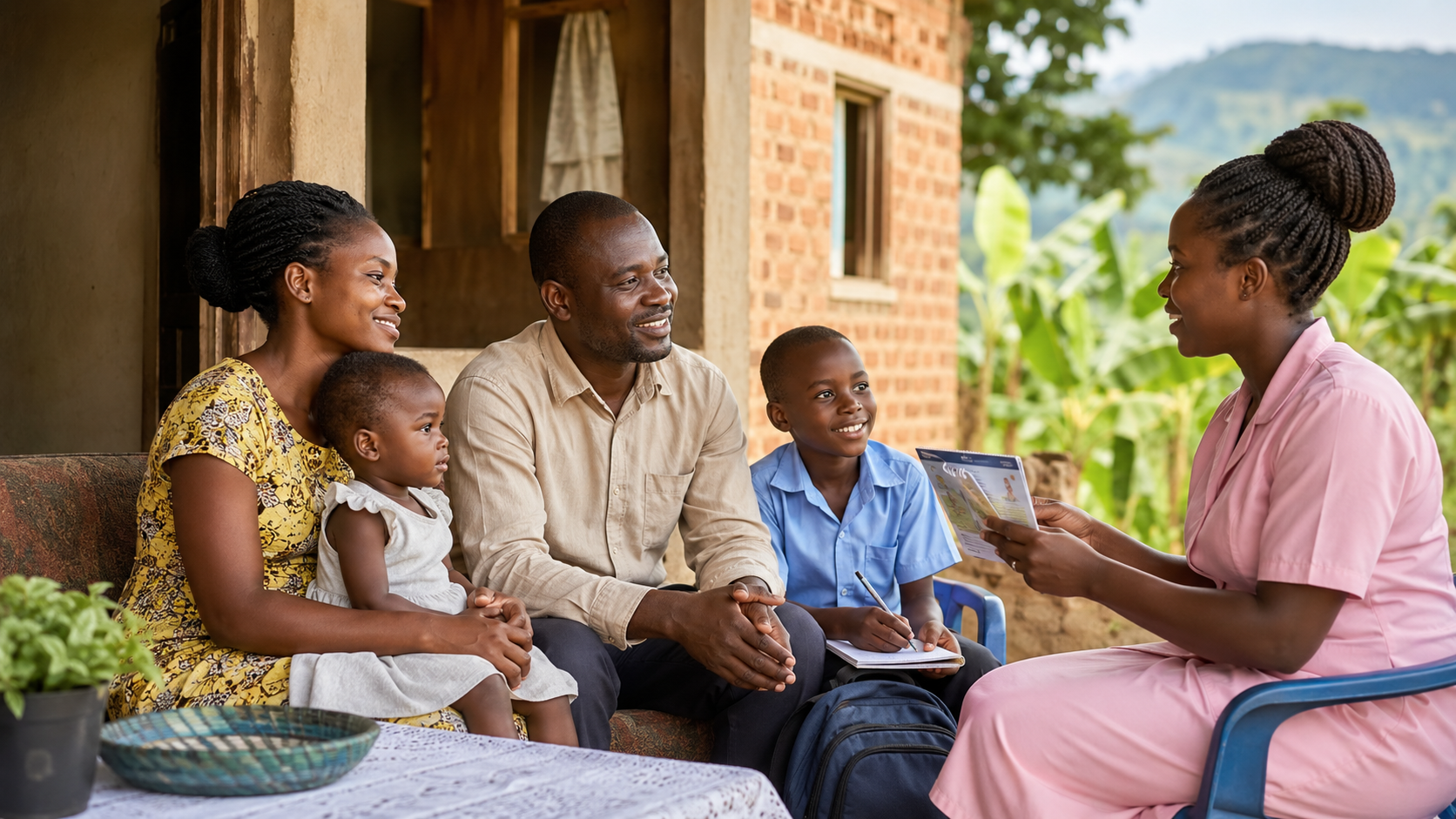
In rural Uganda, a mother who wants to space her children by three years but cannot access contraception is not only facing a health gap. She is facing an education gap for her children, an economic strain on her household, and a missed development opportunity for her country.
That is the bigger truth family planning often fails to get credit for. It is usually discussed as a health intervention - and it is one. But it is also much more than that. Family planning is an education issue, a women’s empowerment issue, a poverty issue, and, crucially, an economic issue.
When women and couples can decide whether and when to have children, the effects travel far beyond the clinic. Girls are more likely to stay in school. Women are better able to participate in paid work. Families can invest more in each child. Health systems face fewer avoidable pressures. And countries are better positioned to harness the demographic dividend that so many African economies are still pursuing.
That is why family planning should not sit at the margins of development policy. It belongs at the centre of it.
Why this matters now
The unmet need remains large. Across Africa, too many women and girls still want to delay or avoid pregnancy but cannot access effective, acceptable, and affordable contraception. In Uganda, the picture remains particularly telling: unmet need for family planning among currently married women remains high, and the burden is even sharper among adolescents and sexually active unmarried women.
This is not only a question of individual choice being constrained. It is a sign of wider structural gaps in access, affordability, information, supply chains, provider attitudes, gender equality, and health system performance.
And the consequences are costly.
When family planning is out of reach, unintended pregnancies rise. Closely spaced pregnancies become more common. Maternal and newborn health risks increase. Girls’ education is disrupted. Household resources are stretched further. Women’s economic participation narrows. Governments spend more responding to preventable outcomes than they would have spent enabling informed choice in the first place.
That is what makes family planning not just a health service, but an economic strategy.
The economic logic is simple
Family planning changes the timing and spacing of births. That seemingly private decision has public consequences.
At the household level, smaller and better-spaced families can make it easier to afford school fees, food, transport, health care, and long-term investments in children. At the individual level, women and girls gain more room to complete school, enter work, recover from childbirth, and make decisions about their futures with greater autonomy. At the national level, lower dependency pressure can create more favourable conditions for human capital investment, savings, productivity, and long-term growth.
This matters even more in youthful societies. The demographic dividend does not appear automatically because a country has many young people. It depends on whether households and institutions can turn that age structure into opportunity. Family planning helps make that possible by reducing dependency burdens and giving families and governments more room to invest in health, education, and livelihoods.
In that sense, family planning is not a side issue in development economics. It is one of its foundations.
A smart investment, not a soft expense
One of the strongest arguments for family planning is that it saves money while generating wider returns.
Expanding contraceptive access reduces unintended pregnancies, which lowers the need for more costly maternal, newborn, and abortion-related care. It also reduces the social and economic costs associated with school interruption, poor maternal health, unsafe abortion, and lost productivity. This makes family planning one of the rare development interventions that is both protective and productive: it reduces immediate risk while strengthening long-term economic potential.
That matters for countries working with constrained budgets. Too often, family planning is treated as something to fund after “hard” economic priorities have been addressed. But that gets the logic backwards. Family planning is not separate from economic development. It is one of the tools that makes development more achievable, equitable, and sustainable in the first place.
Why women’s empowerment is central to the story
The economic case for family planning cannot be separated from gender equality.
When women are able to decide if and when to have children, they are better positioned to pursue education, paid work, entrepreneurship, and leadership opportunities. This does not only improve individual wellbeing. It strengthens households and economies.
But where access remains unequal, the burden falls hardest on those already facing disadvantage: adolescents, rural women, poorer households, refugees, women with disabilities, and those living in fragile or under-served settings.
That is why access matters. And not just in theory. The right to choose must be matched by real availability of quality services, accurate information, trained providers, affordable methods, and systems that respect women’s autonomy.
Uganda’s lesson is bigger than Uganda
Uganda shows why the issue matters. High unmet need among married women, even higher vulnerability among adolescents, and lower access for some groups reveal a wider regional pattern: policy commitment does not automatically guarantee practical access.
A woman may have the legal right to family planning and still face stock-outs, provider bias, transport barriers, misinformation, stigma, or the disapproval of others. She may want to avoid pregnancy, yet still be unable to act on that intention because the system around her makes choice fragile.
This is why family planning is not only about commodities. It is about systems.
Family planning works where health systems are reliable, supply chains are functional, communities are engaged, girls stay in school, and gender norms allow women to make decisions about their own bodies. Without those conditions, it remains rhetorically supported but practically limited.
What action should look like
If African countries want to make a serious economic case for family planning, they must also make a serious policy commitment to it.
That means investing in contraceptive access as part of universal health coverage, not treating it as an optional add-on. It means ensuring that adolescents and young people can access accurate information and youth-friendly services. It means reducing stock-outs, improving supply chains, expanding method choice, and addressing provider bias. It means confronting the social norms that restrict women’s autonomy. And it means financing family planning more consistently, rather than leaving it vulnerable to donor volatility and political cycles.
It also means recognizing that family planning is not only a ministry of health concern. It belongs in national development plans, education policy, gender strategies, labour policy, and economic planning.
What This Means
For governments: Treat family planning as a core development investment, not a narrow health line item. It supports healthier families, stronger human capital, and more sustainable growth.
For donors and development partners: Protect and expand financing for family planning, especially in low-resource and fragile settings where the returns are high and the costs of underinvestment are severe.
For health systems and practitioners: Ensure that services are not only available, but accessible, respectful, well-stocked, and responsive to the needs of adolescents, rural women, and marginalized groups.
For researchers and advocates: Keep building the evidence base on how family planning affects health, education, labour force participation, and long-term economic resilience across African settings.
The Way Forward
The case for family planning is not only moral, medical, or demographic. It is economic.
Countries that invest in family planning are investing in healthier mothers, safer pregnancies, stronger households, better educational outcomes, and greater economic participation. They are creating conditions in which reproductive choice supports dignity, and dignity supports development.
Smaller families do not automatically create bigger futures. But when women and couples have the power, information, and means to make informed reproductive choices, the benefits reach far beyond the clinic.
That is why family planning should be understood for what it truly is: not a peripheral social service, but one of the smartest investments a country can make in its future.