✍️ Authored by the ACSPR Team | Population & Demographic Research
📌 Shaping Africa’s Future with Evidence, Equity, and Innovation for Impact
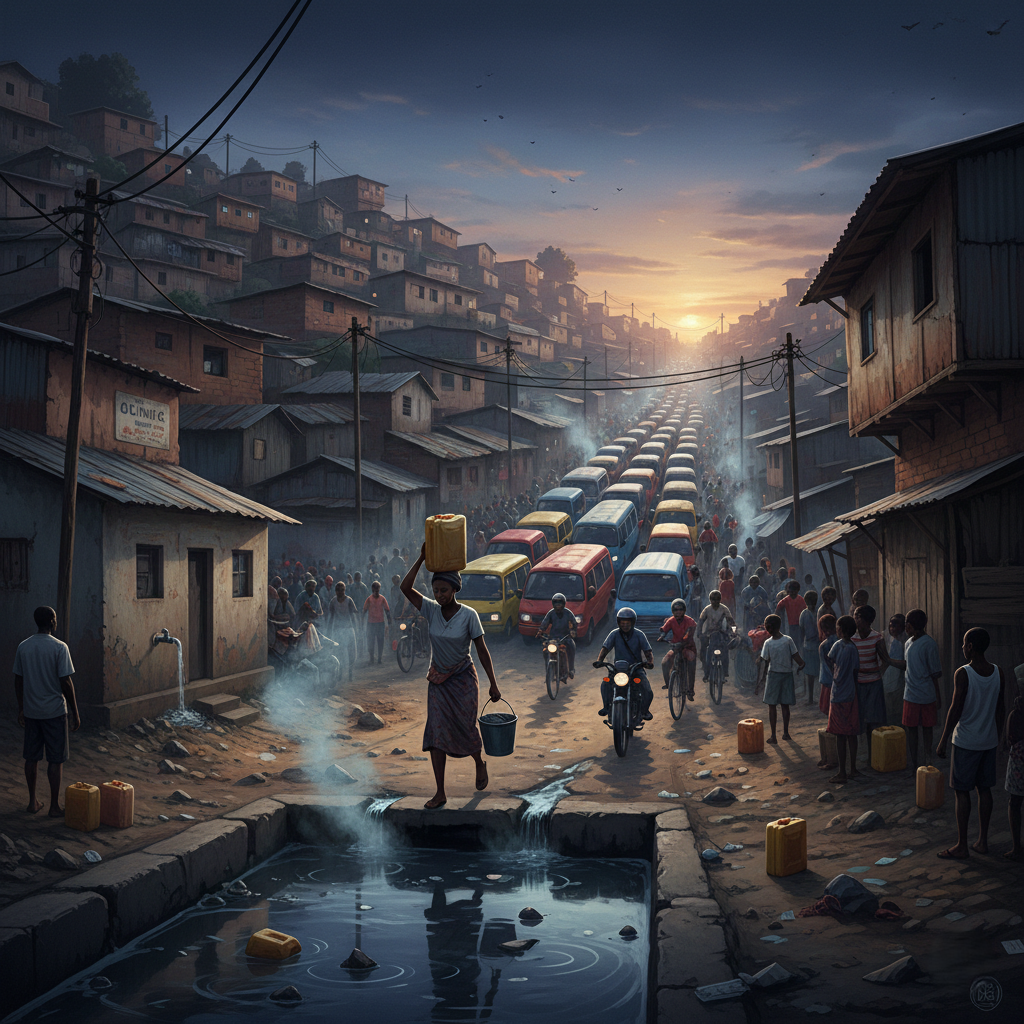
At 5:30 a.m., Amina steps around open drains, the air thick with the smell of standing water to reach a water point before the queue doubles. By mid-morning, the road outside her neighborhood is gridlocked - again - and the clinic down the street has no running water. None of this feels unusual. It is simply the rhythm of life in a city growing faster than it can be planned, serviced, or funded.
Across Africa, urbanization is accelerating - bringing opportunity but also sharpening risk. If institutions and infrastructure don’t catch up, cities will expand into informality, flooding, health crises, and joblessness. If they do, African cities can become platforms for prosperity and inclusion. The difference is not population growth alone. It is preparedness.
What’s Driving Africa’s Urban Surge?
Africa’s urban population is projected to more than triple between 2010 and 2050 - reaching about 1.3 billion urban residents and roughly a quarter of the world’s total urban population. This growth is fueled by births (natural increase), migration, and displacement. But here’s the part many miss: the future of Africa’s urbanization is not only in megacities. It is increasingly concentrated in small and intermediate cities - places with limited planning capacity and weak service systems.
At the same time, cities are spreading outward faster than they are growing in people. Urban footprints expand, densities fall, and neighborhoods stretch into peri-urban zones where roads, drainage, sanitation, and land administration are thin or absent. Sprawl may look like growth, but it often becomes expensive, inefficient, and hard to serve.
When Cities Grow Without Systems
The most visible symptom is housing. When formal supply cannot meet demand, people build what they can afford, where they can access land even if it’s risky. Informal settlements expand, land conflicts rise at the urban fringe, and cities sprawl into wetlands, floodplains, and agricultural land.
Then services buckle. Water points fail. Sanitation lags. Transport congestion becomes a daily tax on households and businesses. Infrastructure systems transport, energy, water, sanitation, and ICT become overloaded not because they are useless, but because they were never built for the speed and scale of today’s growth.
And the economy? Urbanization does not automatically mean jobs. When cities expand without productivity growth, they become places of survival rather than opportunity crowded, costly, and informal. This is the trap often described as “urbanization without growth.”
Finally, risk multiplies. Poor drainage, settlement in hazard zones, heat stress, and environmental degradation increase vulnerability to floods and climate shocks. In some contexts, competition over land, services, and livelihoods can also heighten social tensions and unrest particularly on the urban fringe.
Where the Pressure Hits Hardest
Stress area What unprepared growth looks like
Housing & land Informal settlements, land disputes, peri-urban sprawl
Services & health Poor sanitation, unsafe water, outbreaks, low liveability
Economy Informality, congestion costs, low productivity, weak job growth
Environment & risk Flood exposure, ecosystem loss, heat stress, social tensions
Housing & land Informal settlements, land disputes, peri-urban sprawl
Services & health Poor sanitation, unsafe water, outbreaks, low liveability
Economy Informality, congestion costs, low productivity, weak job growth
Environment & risk Flood exposure, ecosystem loss, heat stress, social tensions
Why Planning Often Fails (Even When Plans Exist)
Many African cities do have plans, but plans don’t build roads, drainage, or water systems. Implementation is often blocked by predictable constraints: weak municipal financing, inaccurate baseline data, fragmented authority, and limited technical capacity at local level. The result is a gap between what is written and what is delivered.
Urbanization can support inclusive growth, but outcomes depend on whether cities can manage land and infrastructure fairly and efficiently. Without that, benefits concentrate among a few while inequality deepens for the rest.
Policy Options: Five Moves Cities Can Make Now
- Back secondary cities early
Put planning support and infrastructure investment where growth is happening small and intermediate cities not only capital cities. - Fix land governance and manage peri-urban expansion
Strengthen land administration, reduce tenure insecurity, and guide growth toward serviced corridors to reduce sprawl and conflict. - Build “basic services first” infrastructure
Prioritize water, sanitation, drainage, transport, and maintenance not prestige projects because these are what keep cities liveable and safe. - Make urbanization a jobs strategy
Link city growth to productivity: support enterprise zones, markets, mobility, and labor-intensive public works that create livelihoods. - Plan with climate and risk in mind
Use risk mapping, green infrastructure, settlement upgrading, and drainage investment to reduce flood exposure and climate vulnerability.
What You Can Do (Even If You’re Not a Policymaker)
Urban crises don’t announce themselves. They accumulate one blocked drain, one informal settlement, one missed investment until they become normal. Readers can still play a role:
- ● Share this piece to keep attention on the realities behind Africa’s urban boom.
- ● If you work in government, development, research, or advocacy: push for “basic services first” and support planning capacity in secondary cities.
- ● If you fund programs: prioritize maintenance, drainage, sanitation, and settlement upgrading not only visibility projects.
Africa’s urban future is not predetermined. The question is whether growth will continue to outrun systems or whether governments, partners, and communities will build the institutions, infrastructure, and land governance needed to make cities safer and more productive. The next decade is the window. After that, catching up may no longer be an option.
Note:
This blog draws on recent research into African urbanization, including studies by Cobbinah, Güneralp, Satterthwaite, Ngounou, and the World Bank.
This blog draws on recent research into African urbanization, including studies by Cobbinah, Güneralp, Satterthwaite, Ngounou, and the World Bank.