✍️ Authored by ACSPR Team | Population and Demographic Research
📌 Shaping Africa’s Future with Evidence, Equity, and Innovation for Impact
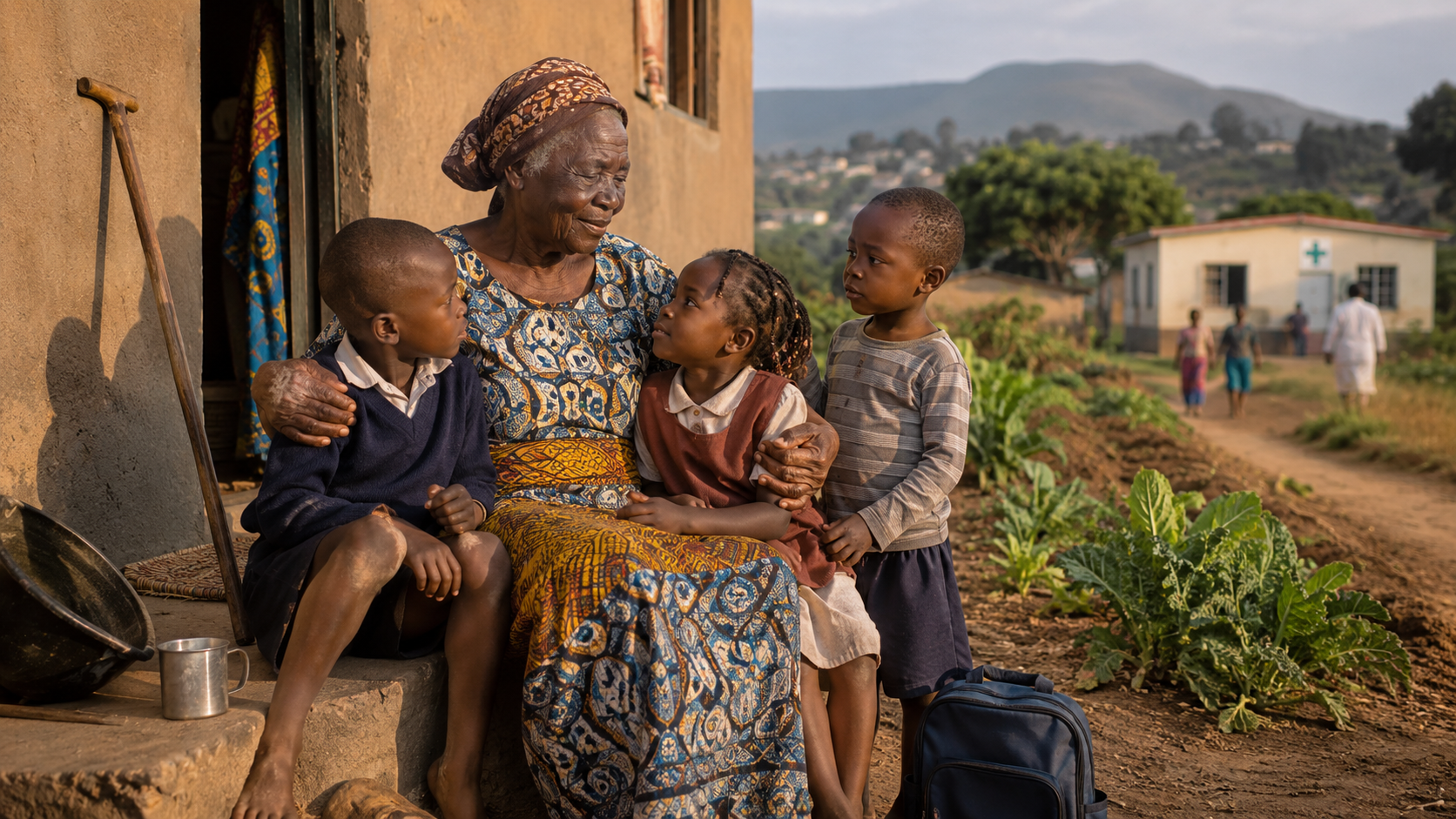
In a rural community in East Africa, an older woman rises before dawn to care for grandchildren, manage the household, and walk long distances for health care or social support that may or may not be available. Her story is not unusual. It reflects a wider reality across the continent: Africa is ageing, but its systems of care, protection, and planning are still far behind.
📌 Shaping Africa’s Future with Evidence, Equity, and Innovation for Impact
In a rural community in East Africa, an older woman rises before dawn to care for grandchildren, manage the household, and walk long distances for health care or social support that may or may not be available. Her story is not unusual. It reflects a wider reality across the continent: Africa is ageing, but its systems of care, protection, and planning are still far behind.
Africa is still the world’s youngest continent. But that familiar fact is beginning to obscure another truth: Africa is also ageing - and faster than many policy systems are prepared for.
That is why ageing in Africa remains a silent crisis. Not because it is small, but because it is still marginal in public debate, development planning, and research priorities. While governments, donors, and institutions continue to focus heavily on youth bulges, jobs, and population growth, a quieter demographic shift is already underway — one that is reshaping households, labour markets, health systems, and care arrangements across the continent.
The evidence is now too strong to ignore. Depending on the estimate used, the number of older adults in sub-Saharan Africa is projected to reach around 163 million by 2050, while continent-wide estimates suggest more than 226 million Africans aged 60 and above could be living on the continent by mid-century. One review estimates a 218% increase in the older population in sub-Saharan Africa between 2019 and 2050. In other words, ageing in Africa is not a distant concern. It is a large, fast-moving demographic transition already underway.
A continent ageing before it is ready
In wealthier regions, population ageing unfolded alongside stronger welfare systems, pension expansion, and health systems better equipped for chronic and long-term care. In much of Africa, the picture is more difficult. The continent is ageing amid poverty, inequality, underfunded public systems, weak income security, and limited institutional support for later life.
That is what makes ageing in Africa different. It is not simply a demographic trend. It is a development stress test.
The challenge is not that Africans are living longer that is a sign of progress. The challenge is that many countries are entering this transition without the social protection systems, care infrastructure, workforce planning, and research base needed to support healthy and dignified ageing.
Why this matters now
Ageing is often framed only as a future burden. But that framing is too narrow.
Across the continent, older persons remain economically and socially central. Labour-force participation among people aged 65 and above is the highest in the world, with one review reporting that in 2015, 52% of older men and 33% of older women in Africa were still economically active. This is not only a story of resilience. It is also a story of necessity. Many continue working not because retirement is optional, but because economic survival leaves little choice.
Older people are also major caregivers. In countries such as Zimbabwe and Namibia, around 60% of orphaned children have been reported as being cared for by grandmothers. Across many African households, older adults continue to anchor family life raising children, providing unpaid care, mediating social relationships, and absorbing the shocks of migration, illness, conflict, and economic stress.
But contribution should not be confused with protection.
The fact that older people keep working, caregiving, and sustaining households does not mean they are adequately supported. In many settings, old age comes with rising vulnerability: declining income security, chronic illness, disability, social isolation, and weak access to formal systems of care.
The health transition Africa cannot ignore
Ageing in Africa is not only a social issue. It is also a health systems issue.
As populations grow older, the disease burden changes. Chronic illness, disability, frailty, multimorbidity, dementia, and mental health needs become more important. Yet many African health systems are still built primarily around infectious disease, maternal and child health, and acute care. They are often underfunded, overstretched, and poorly prepared for the realities of ageing.
The data is striking. One review found that non-communicable diseases accounted for 81% of hospital admissions among older patients in studies from Nigeria, Sudan, and Tanzania. Other reviews describe health systems in sub-Saharan Africa as inadequately prepared for chronic disease management, mental health needs, geriatric syndromes, rehabilitation, and long-term care.
This is not an argument to shift attention away from existing priorities. It is an argument to recognize that African health systems are now being asked to manage multiple transitions at once. They must respond to old and new burdens simultaneously and ageing is becoming part of that reality whether policy catches up or not.
The real gaps are no longer hard to see
If the demographic trend is clear, the system gaps are even clearer.
Policy implementation is one of them. Several countries have developed frameworks or commitments related to older persons, but implementation remains weak. Too often, ageing policy exists on paper but not in routine service delivery, financing, or enforcement.
Social protection is another major gap. Reviews suggest that fewer than 20% of people above retirement age in sub-Saharan Africa have formal income security. That means millions of older people continue working into old age not out of preference, but because they have no reliable pension or income protection.
Care systems are under increasing pressure too. Informal family care remains the backbone of support in much of Africa, but it is being strained by urbanization, migration, changing family structures, and economic stress. Family care is still essential but it can no longer absorb growing demand on its own.
Then there is workforce readiness. Geriatrics and gerontology remain underdeveloped across much of the continent. Reviews repeatedly note the limited availability of specialist training and the low level of public investment in preparing health and care systems for ageing populations. Without trained professionals, even well-intentioned policy cannot become effective service delivery.
Finally, research itself is lagging. Ageing research in Africa has expanded, but important gaps remain: too few longitudinal studies, limited mixed-methods work, weak trial evidence, underuse of available datasets, and insufficient translation of research into policy. That matters because ageing policy cannot be built well without evidence that reflects African realities.
Why the silence is dangerous
Part of what makes ageing in Africa so urgent is precisely that it rarely looks urgent in political conversation.
Ageing does not usually arrive as a dramatic headline. It builds quietly: in clinics overwhelmed by chronic disease, in households depending on grandparents for care, in older workers remaining in informal labour long past retirement age, in pension systems that cover too few people, and in families stretched between obligation and economic fragility.
That political silence is dangerous. It allows ageing to remain treated as a side issue rather than a structural change already underway.
And yet the consequences of neglect are far-reaching. If countries do not plan early, they will face rising pressure on health systems, widening old-age poverty, greater caregiver burden, and deeper inequalities in who gets to age with dignity and who does not.
What action should look like
Africa does not need to import ageing models wholesale from elsewhere. But it does need to act with far greater urgency.
First, ageing must be treated as a mainstream development issue. It should appear not only in health policy, but also in national planning, labour policy, social protection design, urban development, housing, transport, and public finance.
Second, social protection systems need strengthening. Pension reform is especially urgent, because current eligibility rules, low coverage, and limited benefit levels leave too many older adults economically exposed during periods of illness, dependency, or disability.
Third, health systems need to adapt for healthy ageing. That includes age-friendly primary care, chronic disease management, rehabilitation, mental health support, prevention, and long-term care planning.
Fourth, caregiver support must become part of policy design. Much of Africa’s ageing system currently depends on unpaid family care, often carried disproportionately by women. That reality should be recognized, supported, and not simply taken for granted.
Fifth, Africa needs stronger ageing research and closer researcher–policymaker collaboration. Better data, more longitudinal evidence, stronger gerontology training, and more context-specific policy uptake are all essential.
Finally, ageing policy in Africa must be grounded in African social realities. Culture, gender, place, stigma, community values, and caregiving traditions all shape how ageing is experienced. Any serious response must reflect those realities rather than treating ageing as a purely technical issue.
What This Means
For governments: Treat ageing as a mainstream development issue, not a niche health concern. Planning for older populations should be integrated into health, labour, social protection, and national development strategies.
For donors and development partners: Invest not only in youth and population growth, but also in healthy ageing, long-term care, pension reform, and evidence generation.
For researchers: Expand longitudinal and interdisciplinary research on ageing in Africa, and do more to translate findings into practical policy guidance.
For civil society: Advocate for the rights, dignity, and inclusion of older persons in national planning, public services, and social protection systems.
Conclusion
Africa’s ageing challenge is not silent because it is small. It is silent because political attention has not yet caught up with demographic reality.
The evidence is now clear: ageing in Africa is already a large, fast-moving, and underprepared transition. Older persons are not peripheral to development. They are workers, caregivers, community anchors, and citizens whose needs and contributions will matter more, not less, in the decades ahead.
The question is no longer whether Africa should prepare for ageing. It is whether it will do so early enough.
Because the real risk is not that Africa is ageing.
The real risk is that Africa will continue ageing without the policy, care systems, and research capacity needed to do it well.