✍️ Authored by the ACSPR Team | Health & Well-being
📌 Shaping Africa’s Future with Evidence, Equity, and Innovation for Impact
The SRHR Gap: When Rights on Paper Aren’t Enough for Vulnerable Communities
📌 Shaping Africa’s Future with Evidence, Equity, and Innovation for Impact
The SRHR Gap: When Rights on Paper Aren’t Enough for Vulnerable Communities
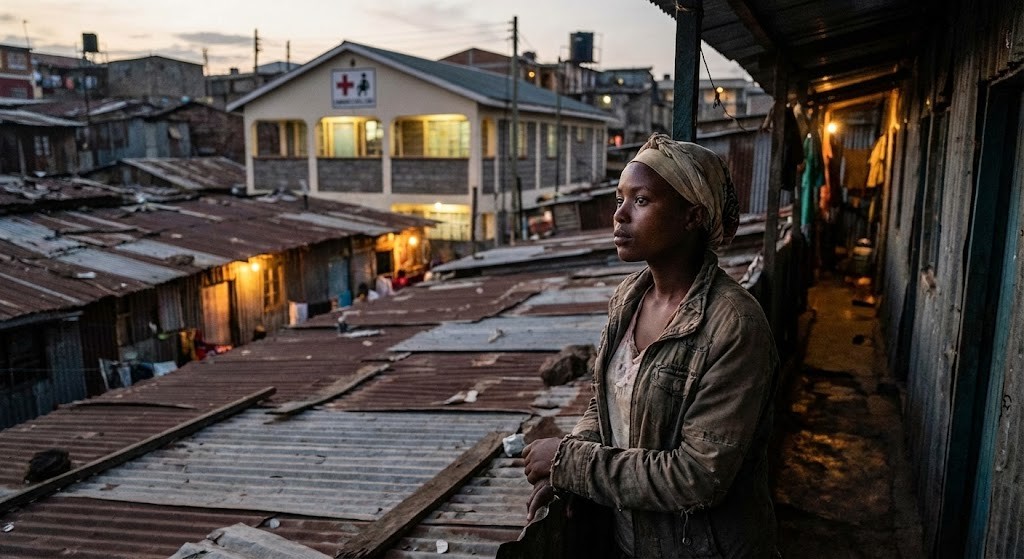
Maria, 16, lives in an urban slum. She knows where the health clinic is. But she also knows the nurse will shame her for asking about contraception. Her right to sexual and reproductive health information exists in policy - but not in practice.
Across low- and middle-income countries, sexual and reproductive health and rights (SRHR) are widely recognized as fundamental human rights. Yet for millions of vulnerable people, these rights remain out of reach. Refugees, migrants, adolescents, the urban poor, and sexual minorities routinely face barriers that deny autonomy, safety, and access to care.
This gap between formal rights and lived realities reveals a deeper truth: SRHR is shaped not only by services, but by inequality, discrimination, and weak systems.
When Rights Exist in Law but Not in Life
SRHR includes the right to bodily integrity, informed choice about relationships and childbearing, and access to respectful, confidential healthcare. However, research consistently shows that these rights are frequently violated in marginalized settings.
Young women in informal settlements report limited control over fertility and marriage, alongside poor-quality services. Refugees and displaced populations face unsafe abortion, gender-based violence, and weak healthcare access. Sexual minorities encounter stigma and discrimination when seeking HIV and SRH services.
Across contexts, vulnerability translates directly into restricted autonomy and compromised health.
Structural Inequalities Driving SRHR Violations
Refugees and Displaced Populations
Women and adolescents in humanitarian settings face legal insecurity, high service fees, mobility restrictions, unsafe abortion, poor obstetric care, and elevated gender-based violence. Weak policy protection further compounds vulnerability, particularly in urban displacement settings.
Migrant and Refugee Women
Discrimination, language barriers, stigma, cost, and lack of legal safeguards routinely block access to care. Fear of mistreatment discourages many women from seeking services even when clinics exist.
Urban Poor Girls and Young Women
Poverty, unsafe housing, gender norms, low education levels, and under-resourced health systems shape daily risk. Adolescents in slums face heightened exposure to early pregnancy, violence, and restricted reproductive autonomy.
Adolescents Across Low- and Middle-Income Countries
Early marriage, limited sexuality education, judgmental health providers, and weak youth-friendly services continue to undermine informed decision-making and safe care.
Why Expanding Services Alone Has Not Closed the Gap
Many countries have expanded SRH clinics and programs over the past decades. Yet inequalities persist.
The evidence shows that access without dignity, affordability, legal protection, and inclusion does not equal rights.
When services are discriminatory, stigmatizing, unsafe, or financially out of reach, vulnerable populations remain excluded even where coverage appears strong.
What Rights-Based Approaches Reveal
Human rights–based approaches aim to place participation, non-discrimination, accountability, and empowerment at the center of SRH programming.
Evidence suggests these approaches can improve SRH knowledge, HIV testing, and contraceptive use, particularly when combined with community engagement.
Key facilitators repeatedly identified include:
✔ Respectful, culturally competent care
✔Youth-friendly and person-centered services
✔ Peer education and community empowerment
✔ Legal protection against violence and discrimination
✔ Inclusive data systems and cross-sector collaboration
✔Youth-friendly and person-centered services
✔ Peer education and community empowerment
✔ Legal protection against violence and discrimination
✔ Inclusive data systems and cross-sector collaboration
While intervention quality varies, the direction is clear: equity-centered design works better than service expansion alone.
From Formal Commitments to Lived Rights
Across diverse global contexts, SRHR is widely framed as a human right yet remains unrealized for many.
Structural inequality, discriminatory norms, weak health systems, and legal gaps continue to restrict autonomy and safety.
Closing this gap requires more than clinics. It demands:
✔ Rights-based service delivery
✔ Strong legal protection
✔ Community empowerment
✔ Youth inclusion
✔ Equity-focused data
✔ Cross-sector action
✔ Strong legal protection
✔ Community empowerment
✔ Youth inclusion
✔ Equity-focused data
✔ Cross-sector action
Why SRHR Is Central to Development and Justice
When SRHR rights are upheld:
✔ Maternal and adolescent deaths decline
✔ Education outcomes improve
✔ Gender equality advances
✔ Poverty cycles weaken
✔ Community resilience grows
✔ Education outcomes improve
✔ Gender equality advances
✔ Poverty cycles weaken
✔ Community resilience grows
When rights are denied, vulnerability compounds across generations.
SRHR is not a marginal health issue - it is foundational to human development.
ACSPR’s Commitment to Rights-Centered Evidence
At ACSPR, we examine how structural inequality shapes access to SRH information, services, and autonomy across vulnerable communities - particularly youth, persons with disabilities, displaced populations, and the urban poor.
Our work supports:
✔ Evidence-driven policy reform
✔ Inclusive health systems
✔ Community-centred interventions
✔ Rights-based programming
✔ Inclusive health systems
✔ Community-centred interventions
✔ Rights-based programming
Because lasting progress requires moving beyond access to equity, dignity, and justice.
Sexual and reproductive health rights are widely endorsed in policy frameworks yet denied daily in lived experience.
For vulnerable communities, SRHR remains shaped by inequality rather than choice.
True progress lies in transforming formal rights into lived realities. Until equity sits at the centre of SRHR programming, human rights will remain promises unfulfilled.